Signs Your Toddler Is Ready for School
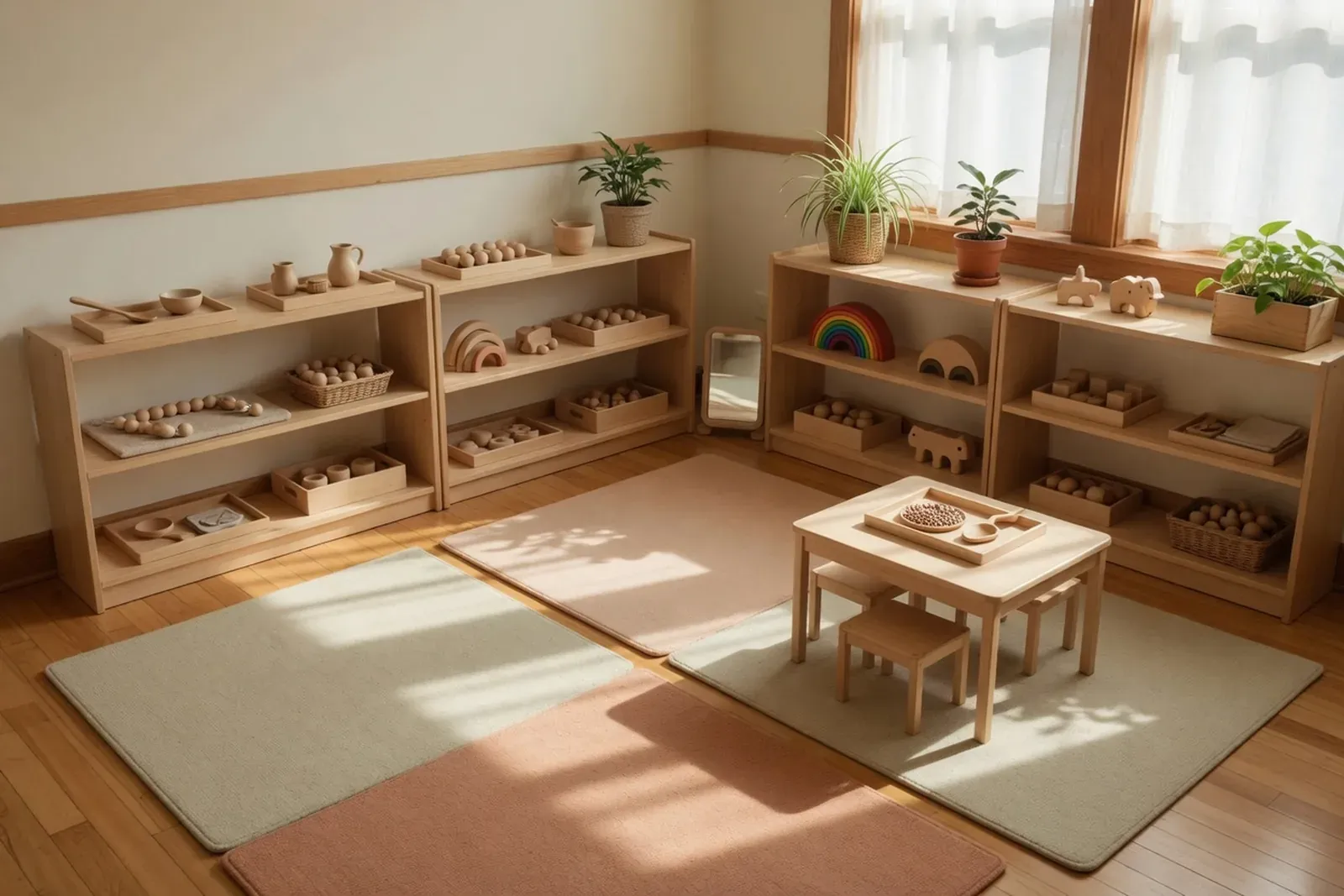
The question is rarely, “Can my toddler learn the alphabet?” It is usually more tender than that: “Will they be okay without me?” Parents wonder whether a child who still wants a familiar hand at the door, communicates in a mixture of words and gestures, or needs help with a jacket is ready for a group setting. Those are reasonable questions. School readiness at this age is not a test your child passes. It is a collection of small signs that they are becoming curious about the world beyond home.
A good toddler program meets children in that in-between stage. It does not expect a miniature preschooler. It offers a predictable room, adults who notice the details, and enough time for a child to learn the rhythm. Here are the signs worth watching, along with a few things that do not need to be in place yet.
They want to do real things for themselves
Independence often shows up before it looks polished. Your toddler may insist on carrying the napkins to the table, push a small stool to the counter, or bring a shoe when it is time to leave. They may take a long time to place one banana in a bowl, then beam when they finish. That purposeful effort matters more than speed.
Notice whether your child imitates ordinary work. Many toddlers want to wipe a spill, put laundry in a basket, feed a pet, or sweep alongside you. They are learning that their actions affect their surroundings. In a classroom, these impulses become useful work: pouring water, returning a material to its shelf, setting a snack table, or carrying their own belongings from one place to another.
You do not need to turn home into a school to encourage this. Offer one manageable job, wait longer than feels comfortable, and let the result be imperfect. A towel folded into a lumpy square still represents concentration, coordination, and pride. Those are strong foundations for a toddler classroom.
They are communicating, even if they are not speaking in full sentences
Language readiness is not measured by a particular word count. Some toddlers speak in short phrases. Others point, sign, lead an adult by the hand, or use a few clear words at a time. What matters is that your child is beginning to communicate needs, interests, and feelings in some way, and is interested in the language around them.
Listen for small exchanges. Do they answer a simple question sometimes? Do they name a favorite truck, ask for more, or bring you a book to read again? Do they understand familiar routines such as “shoes on” or “time to wash hands”? These moments suggest that your child can begin connecting with an adult and participating in a shared routine.
A responsive program builds language into the day instead of waiting for a child to arrive with it. Adults name actions as they happen: “You carried the cup carefully.” “You found the red ball.” Songs, books, conversations at snack, and repeated routines give children many low-pressure chances to understand and respond. If your child is developing more than one language at home, keep using the language that lets your family connect most naturally. A strong first language supports communication in every setting.
They can stay with something for a few minutes
Toddlers do not need a long attention span to start school. A few absorbed minutes can be plenty. Maybe your child repeatedly fills and empties a container, turns pages in a sturdy book, lines up animals, or watches you prepare food. Repetition is not boredom. It is often how a young child makes sense of a new skill.
Look for interest rather than stillness. A toddler who moves around the room may still be deeply engaged if they are choosing, carrying, testing, and returning to an activity. In a thoughtfully prepared environment, materials are sized for small hands and arranged so children can make a choice without having to ask for every step. That choice gives their concentration somewhere to land.
Curious what this looks like in a real classroom?
Schedule a VisitThey are beginning to separate, with support
Separation readiness does not mean your child walks in without looking back. It means they may be able to accept comfort from another trusted adult, explore for a moment after you leave, or recover after a brief protest. Some children do that on the first day. Others need a gradual start. Both are normal.
Practice can help, but it should feel ordinary. Leave your child with a familiar caregiver for a short, predictable stretch. Say goodbye clearly rather than slipping away. When you return, name what happened: “You played with Grandma, and I came back after snack.” This builds a simple, dependable pattern.
At school, transitions work best when adults keep the routine steady. A short goodbye, a familiar arrival sequence, and a calm handoff tell a child what comes next. Programs also bridge the gap by offering a task right away. A child might carry a lunch bag to its place, choose a book with an adult, or help put a napkin on the table. The goal is not to distract away every feeling. It is to show the child that they can feel uncertain and still find their footing.
What your toddler does not need before starting
Many parents delay a school search because they assume their child must be potty trained, able to recite letters, or comfortable sharing every toy. Those milestones can come in their own time. Toddlers learn through movement, repetition, and daily care routines. The early school years should support that development, not require a child to prove it first.
Your child also does not need perfect manners, independent dressing, or a tear-free drop-off history. They need adults who can set kind, clear limits and help them practice. “You may carry the cup with two hands.” “Your friend is using that now. You can have a turn when it is back.” These are skills learned through hundreds of ordinary moments.
Before you visit any program, ask how it handles toileting, meals, naps, and transitions. The answers will tell you more than a list of academic activities. You are looking for a place that sees care routines as part of learning, not as interruptions to it.
Why a 3:1 toddler ratio changes the beginning
The first weeks of school contain a lot of new information: unfamiliar faces, a different room, a new sequence for eating and resting, and other children nearby. A 3:1 toddler ratio gives adults more room to notice how each child is taking it in. One child may need help putting on a slipper. Another may need a quiet invitation to join an activity. A third may be ready to repeat the same pouring work five times.
Small-group attention does not remove every hard moment, and it should not promise an instant adjustment. It does mean a child is less likely to disappear into the busy parts of the day. At Montessori School of Fairfax, the Toddler program serves children from 18 months to 3 years with a 3:1 ratio. You can learn more about the room, its routines, and the age range on the Toddler program page.
How to decide when the time is right
Put the checklist aside for a moment and picture a typical morning. Does your toddler show interest in people, objects, and routines outside the immediate family? Are they beginning to try things independently, even when they need help to finish? Can they communicate enough for a caring adult to start understanding them? If the answer is mostly yes, a visit can give you much better information than another month of wondering.
Watch the children when you tour. Notice whether the adults get down to their level, speak plainly, and give them time. Notice whether children can reach what they use and whether the room has a calm rhythm. Bring your real questions about naps, comfort items, food, toileting, and goodbyes. The right program will treat them as part of getting to know your child.