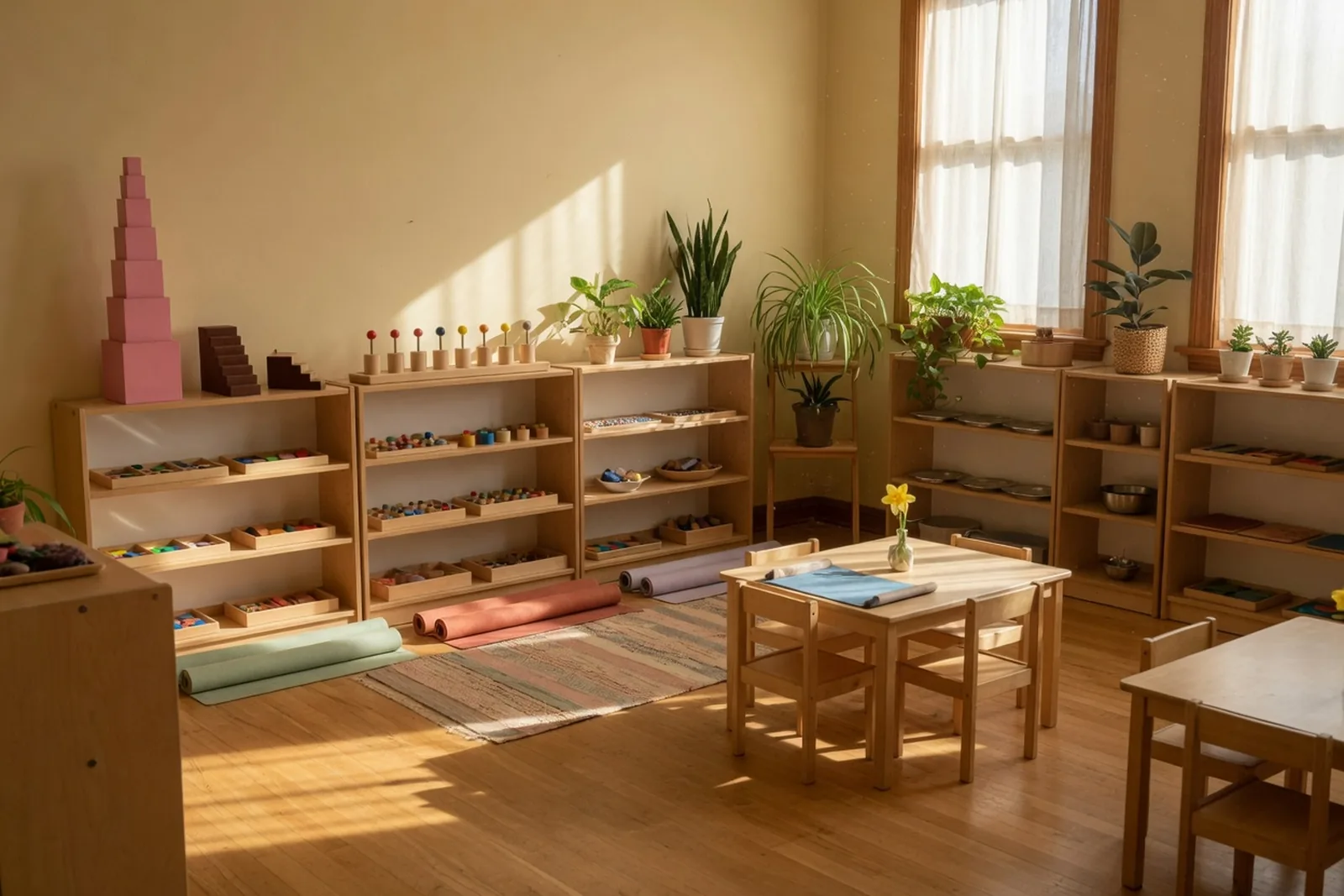
Ages 3 to 6
Early Childhood
This is the classroom Montessori is famous for. Over three years, your child moves from pouring water and buttoning frames to reading, writing, and four-digit arithmetic.
The classroom
Five areas, one room, three years.
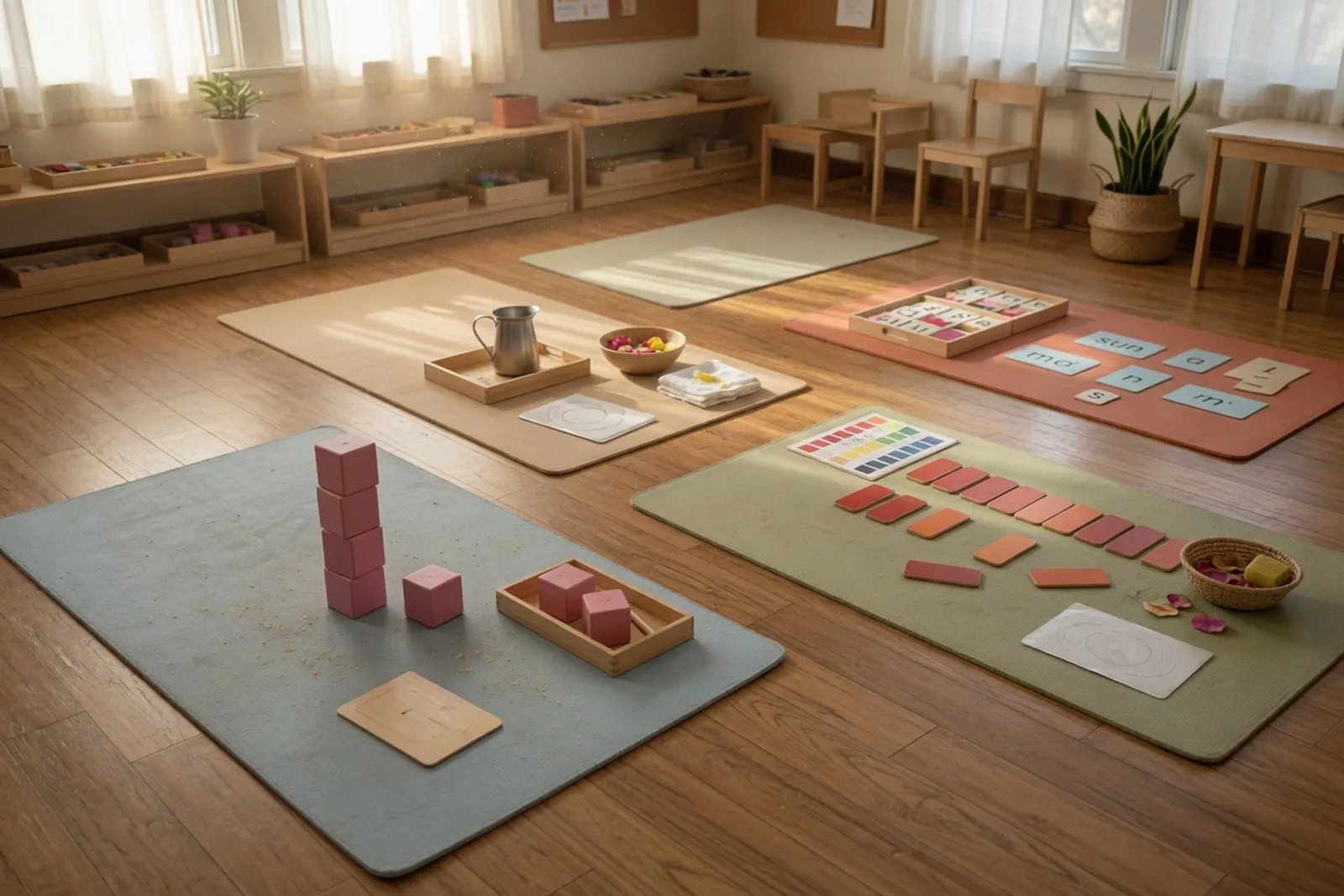
Walk into an Early Childhood room at 9:30 on a Tuesday and you will see a 3-year-old scrubbing a table with total attention, a 4-year-old building words out of cut-out letters, and a 5-year-old carrying a tray of golden beads back to the shelf. Nobody stands at the front of the room. The guide is on the floor, giving one child one lesson.
This is the classroom Maria Montessori designed first, and it is the one most people picture when they hear the word Montessori. Every material on the shelves isolates a single concept and lets a child repeat it until the concept belongs to them.
Children join at age 3 and stay with the same guides through the kindergarten year. Three years, one room, one community.
What your child works with
The five areas of the room.
Practical Life
Pouring, buttoning, food preparation, and care of the classroom. These look like chores and work like concentration training. A 3-year-old who can scrub a table for 20 minutes is ready for everything else on the shelves.
Sensorial
The pink tower, color tablets, and geometric solids give a child's senses a filing system. Bigger and smaller, rougher and smoother, louder and softer: every one of those judgments is quiet groundwork for mathematics.
Language
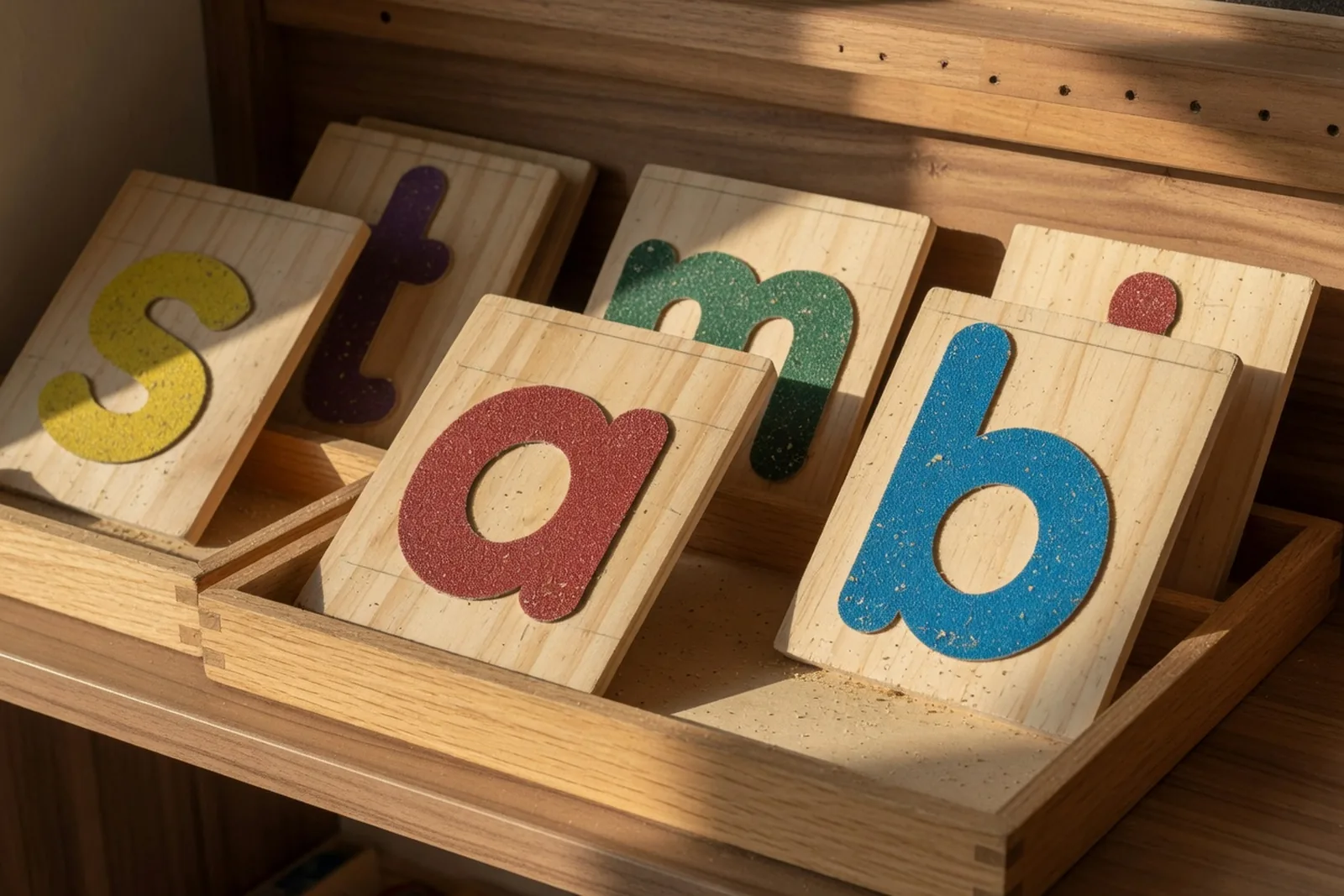
Sandpaper letters teach sounds through the fingertips. The moveable alphabet lets children build words years before handwriting catches up. Writing comes first, and reading follows, often quietly and all at once.
Mathematics
Golden beads make the decimal system something a child can hold: a unit, a ten-bar, a hundred-square, a thousand-cube. Children carry, trade, and exchange them with their hands long before anyone calls it arithmetic.
Culture & Geography
Puzzle maps, land and water forms, botany, art, and music. Children this age want the whole world, so we put the whole world on shelves they can reach.
The three-year arc
Youngest watch. Middles work. Oldest lead.
A mixed-age room of 3-to-6-year-olds is not a compromise. It is the engine. Older children give lessons they have mastered, which cements their own understanding, and younger children see every day exactly what they are growing toward.
- Year one: your child absorbs the room, watches older children work, and learns its rhythms
- Year two: concentration deepens, lessons multiply, and letters start turning into words
- Year three: your child gives the help they once received and leads the classroom community
Parents ask, quietly, the same worry from two directions: will a quick child be held back, and will a slower one be left behind? The mixed-age room answers both. A 4-year-old ready to read does not wait for a calendar, and a child who needs another month with a material takes the month, without a label and without a front-of-room pace set for twenty.
That third year matters enough that we gave it its own page. If you are weighing an early move to public kindergarten, read it before you decide. Families join this classroom from across the towns we serve in Fairfax County and eastern Loudoun.
The daily rhythm
What a day here looks like.
The centerpiece is a long, protected work cycle. Everything else in the day is arranged around it.
| Time | What is happening |
|---|---|
| 7:30 a.m. | Early care opens for families who need it |
| 8:30 a.m. | Arrival. Each child is greeted by name and chooses their first work |
| 8:45 a.m. | The uninterrupted work cycle: individual lessons and independent work |
| 11:45 a.m. | Community circle with songs, conversation, and grace and courtesy |
| 12:15 p.m. | Lunch together, then outdoor time in the fresh air |
| 1:30 p.m. | Rest for younger children, afternoon work for older children |
| 3:30 p.m. | Dismissal, or Enrichment and after-care until 6:00 p.m. |
Questions parents ask
Early Childhood, honestly answered.
My child can't read yet. Is that a problem?
No. Most children arrive at 3 without knowing their letters, and the classroom is built for exactly that. Children learn letter sounds through sandpaper letters, build words with the moveable alphabet, and usually write before they read. A guide watches each child for the right moment for each next lesson, so nobody is rushed and nobody is held back. If you want the full sequence, we wrote it out step by step in how children learn to read in Montessori.
How does Early Childhood prepare my child for kindergarten?
The third year of the cycle is our Kindergarten year, so there is no separate school to get ready for. Children typically finish the cycle reading, writing, working with four-digit numbers, and leading the classroom community. That final year is where the first two years pay off.
Do you offer half-day and full-day schedules?
Yes. Families choose a half-day or full-day schedule, and before- and after-school care extends the day for working parents. Care is available 7:30 a.m. to 6:00 p.m. We review current schedule options, availability, and fit for your family during your visit.