Montessori for Strong-Willed Kids
Parenting
A strong will is not a problem to solve. With clear limits and real responsibility, it can become a child's working strength.
When parents ask whether Montessori is right for a strong-willed child, they are usually asking a more urgent question: will my child be understood here, or will every day become a battle?
You may know the pattern. Your child has a firm idea about the blue cup, the route home, or who gets to press the elevator button. They protest a change with their whole body. They notice loopholes. They may also stay with a puzzle long after everyone else has moved on, insist on doing a task themselves, and remember exactly what you promised.
That intensity can exhaust a family. It can also be the early form of persistence, judgment, and initiative. The goal is not to make a child smaller or more compliant. The goal is to help them use their considerable energy in ways that work for them and for the people around them.
Strong will is often executive energy
“Strong-willed” is a description, not a diagnosis. It often means a child has a powerful need to act, decide, repeat, and influence their environment. Young children are still learning how to pause, shift gears, recover from disappointment, and consider someone else's needs at the same time. Their will may arrive before those skills do.
It helps to separate the drive from the behavior. Throwing a shoe because it is time to leave is not acceptable. Wanting to control the departure is understandable. A child who argues every instruction may be seeking agency, predictability, connection, or more time to finish something important. The adult's job is to hold the boundary and look for the need underneath it.
Montessori starts from a useful premise: children want to become capable. Rather than offering freedom without structure or control without dignity, a Montessori environment gives children meaningful ways to direct themselves inside clear limits. This is where a determined child often finds room to breathe.
Use choices that are real and limited
Choice is not a trick for making a child cooperate. It is a practical way to let them practice decision-making without handing them the whole day. The best choices are ones you can genuinely honor.
Instead of asking, “Do you want to get dressed?” when getting dressed must happen, try: “It is time to get dressed. Would you like the green shirt or the striped shirt?” Instead of debating whether to clean up, say: “The blocks need to go back before snack. Will you carry the basket or put the long pieces on the shelf?”
Notice what stays with the adult: the time, the limit, and the responsibility. Notice what belongs to the child: a workable decision within that limit. Too many options can feel like a negotiation, especially when everyone is tired. Two choices are often enough.
For toddlers, the choices need to be even more concrete. A child may choose which shoe goes on first, whether to walk to the sink or hold your hand, or whether to wipe the table with a cloth or a small sponge. These are small acts, but they tell a child, “You have a part in this.” If you are looking for that first stage of independence in a school setting, explore the Toddler program.
A prepared environment can absorb intensity
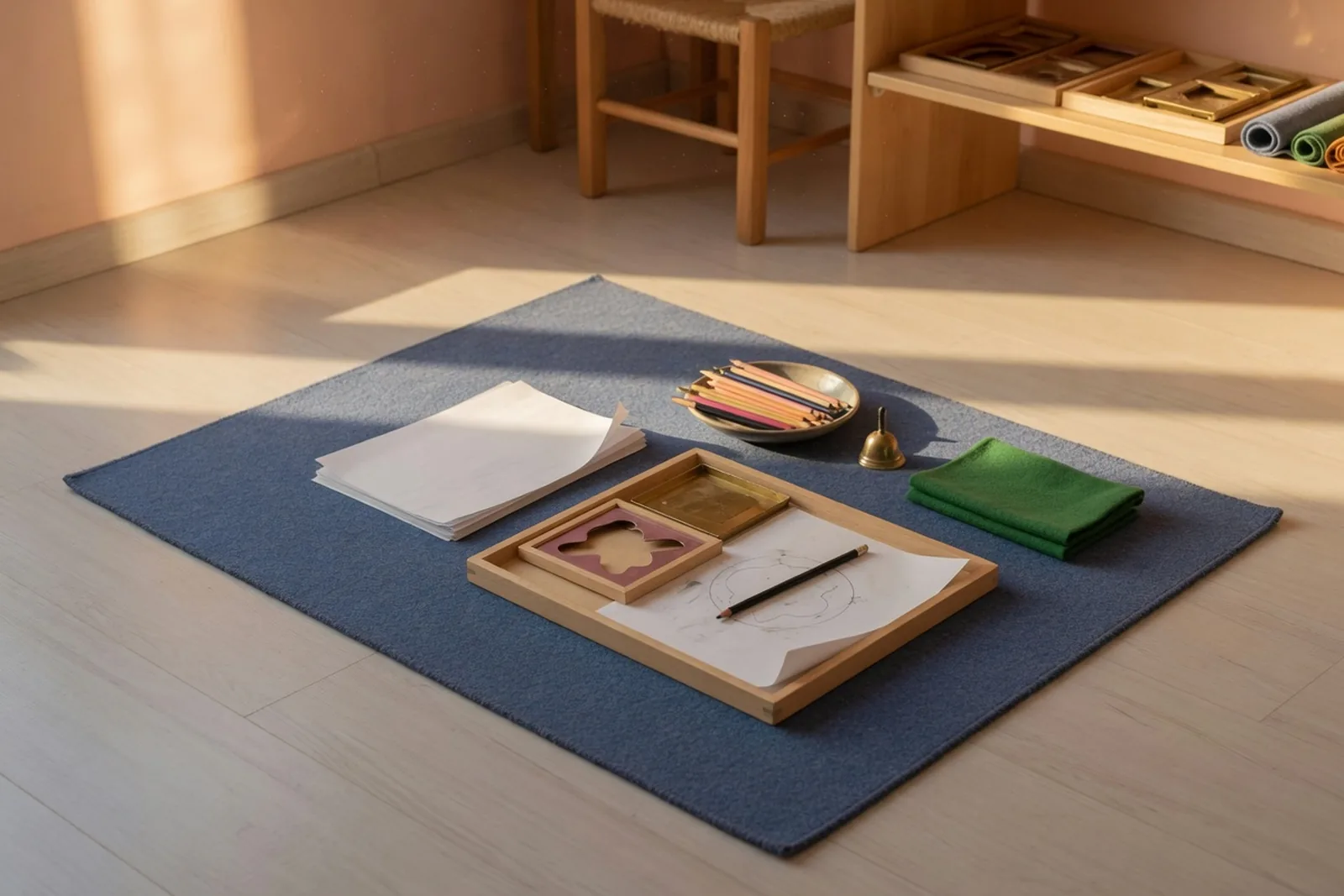
Strong feelings do not disappear because a room has low shelves. But the design of a space can reduce unnecessary friction. In a prepared Montessori environment, materials have a place, work has a clear beginning and end, and many daily tasks are sized for the child rather than reserved for an adult.
A child who needs to move can carry a tray, roll a work rug, wash a table, or take a message to another part of the room. A child who wants control can choose from materials they know how to use. A child who has trouble stopping can see what comes next, return work to its place, and be supported through the transition.
This matters because repeated conflict often grows around moments of helplessness: waiting while an adult does everything, being interrupted with no warning, or hearing “no” without a path forward. The environment cannot remove every hard moment. It can give a child more legitimate ways to act.
In a small classroom community, that pattern-noticing has a face attached to it. A guide who stays with the same group of children across a three-year cycle learns that one particular child needs a five-minute warning before a transition, or does better on a hard morning if they are carrying something heavy first. That kind of knowing does not scale to a large group. It happens because someone is paying close attention to your specific child, for years, not just this semester.
At home, you can borrow the same idea without recreating a classroom. Put two snack options within reach. Keep a hamper where your child can use it. Make one low drawer for cups, plates, and a small towel. Keep art supplies contained and available. The point is not perfect order. It is creating a few places where your child can say, through action, “I can handle this.”
Curious what this looks like in a real classroom?
Schedule a VisitWhat steady guidance can sound like
Imagine a generic classroom moment. A child has been working with a set of cylinders and does not want to join the group gathering. The adult does not yank the material away or launch into a long explanation. They come close, name what they see, and offer a clear next step: “You are still working. Group is beginning now. You may put the last two cylinders in, then I will help you return the work.”
The child may still object. A respectful response does not guarantee a cheerful one. What it does provide is consistency: the work matters, the group matters, and the adult will help the child cross the gap between them. Over time, children learn that a limit is not a personal defeat. It is part of living with other people.
Language works best when it is brief, calm, and followed through. “I will not let you hit.” “You wanted to keep going. It is hard to stop.” “You can be angry. You cannot throw the chair.” These sentences acknowledge the feeling without making the feeling the decision-maker.
Adults also need to resist the urge to keep talking once a child is flooded. Offer safety, fewer words, and time. Then reconnect later, when everyone can think again. A strong-willed child often hears plenty of correction. They also need to experience repair, trust, and another chance to practice.
When to breathe, and when to seek more support
Many intense behaviors are developmentally ordinary, especially during transitions, hunger, fatigue, illness, or a period of rapid change. A child who is forceful at home but can connect with others, recover with support, play, and make progress in daily routines may simply be learning skills on a slower timetable than you would like. Breathe. Stay predictable. Keep the limits simple.
It is worth seeking guidance when intensity regularly creates safety concerns, prevents your child from participating in daily life, persists across settings, or leaves your family feeling constantly isolated and overwhelmed. Your pediatrician can help you think through what you are seeing and whether a developmental, behavioral, sensory, or mental-health evaluation could be useful. Asking for support is not labeling your child. It is gathering better tools.
Teachers can be valuable partners, too. Share what helps at home, ask what they observe in group settings, and look for patterns rather than one difficult day. A child may need more transition warning, a quieter recovery space, more physical work, or a simpler routine. The most useful plan is specific enough to try this week and flexible enough to revise.
Keep the relationship bigger than the struggle
Your child does not need you to win every moment. They need you to be the calm adult who can hold a boundary, offer a real choice, and remember their strengths when the day has gone sideways. That is demanding work. It also gives a determined child a model for using power with care.
Strong-willed children are often telling us, loudly, that they are ready to matter. Give them responsibility that is real, limits that are steady, and room to practice. Their will does not need to disappear. It needs direction.